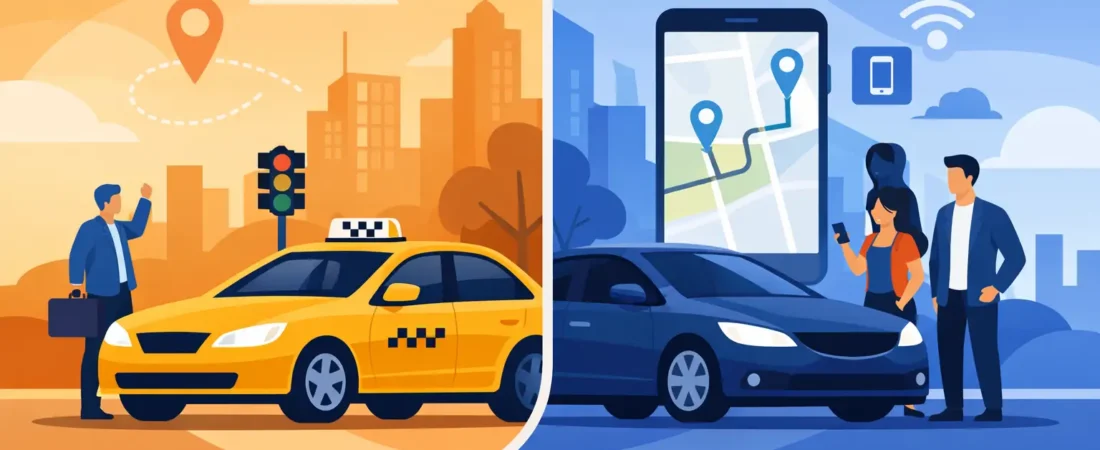
You need a ride now, not a lesson in transportation apps. That is usually when people ask, what is the difference between taxi and rideshare, especially when they are trying to get to work, make an appointment, or get home without delays. The short answer is simple: both get you from one place to another, but they work in very different ways, and those differences can matter a lot when time, cost, and reliability are on the line.
For many riders in Hempstead and across Nassau County, the choice comes down to what feels easier and more dependable in the moment. Some people prefer tapping around in an app. Others would rather make one phone call, speak to a real person, and know their ride is on the way. Neither option is automatically better every time. It depends on what kind of trip you need.
What Is the Difference Between Taxi and Rideshare?
A taxi is a traditional for-hire vehicle service. You call for a ride, schedule one, or in some places hail one, and a licensed local driver picks you up and takes you directly to your destination. The service is usually run by a local company that knows the area and focuses on point-to-point transportation.
A rideshare service is usually app-based. You request a ride through a platform, nearby drivers choose or accept trips through that app, and pricing, routing, and payment are all handled digitally. The driver is usually using a personal vehicle and working through a larger tech platform instead of a neighborhood taxi company.
That basic setup changes the entire customer experience. The booking process feels different. The pricing can feel different. Even the way problems get solved can be very different.
Booking a Ride: Phone Call vs App
One of the biggest differences is how you get the ride started. With a taxi, the process is often direct. You call, give your location, say where you are going, and your ride is dispatched. For plenty of people, that is still the fastest and least frustrating option, especially if they are in a hurry, dealing with low battery, or just do not want to troubleshoot an app.
Rideshare is built around self-service. You open the app, enter your destination, confirm the pickup point, review the quoted fare, and wait for a driver to accept. For people who are comfortable with apps, that can feel convenient. But when the app glitches, the map pins the wrong location, or service is spotty, it can quickly become more complicated than expected.
For older adults, visitors unfamiliar with the area, or anyone who simply wants a human on the other end of the line, taxis often feel more straightforward. That personal contact matters more than people think until they need help right away.
Pricing Is Not Always as Simple as It Looks
People often assume rideshare is always cheaper. Sometimes it is. Sometimes it is not.
Traditional taxis usually follow a more familiar fare structure based on time, distance, local rates, and dispatch policies. That can make pricing feel more stable and predictable for everyday local trips. You may not always see a flashy discount, but you are also less likely to be surprised by a sudden price jump just because demand spiked.
Rideshare platforms often use dynamic pricing. That means fares can rise when demand is high, such as during rush hour, bad weather, late nights, holidays, or after events. A ride that looked affordable ten minutes ago may suddenly cost much more.
This is one of the clearest examples of why the answer to what is the difference between taxi and rideshare is not just about the car. It is about how the service operates behind the scenes. If your priority is finding the absolute lowest price at a quiet time of day, rideshare may work out well. If your priority is avoiding price swings, a local taxi may feel like the steadier option.
Reliability Depends on the Situation
When you need transportation for something important, reliability matters more than novelty. A ride to the train station, a doctor appointment, work, school pickup, or the airport is not the kind of trip where people want uncertainty.
Taxi services are built around dispatching rides as a core transportation business. A local company serves its area every day and usually knows the traffic patterns, neighborhoods, and common pickup spots. That local familiarity can make a real difference when time is tight.
Rideshare depends on driver availability in the app at that moment. If fewer drivers are nearby, your wait may be longer. If a driver cancels, you may be pushed back into the queue. In busy periods, you might get a ride quickly, but in slower coverage areas or during peak demand, it may be less predictable.
That does not mean rideshare is unreliable across the board. It means reliability can vary more based on timing, driver supply, and app activity. For routine local travel, many riders still prefer the consistency of a taxi that is just a call away.
The Driver Experience Is Different Too
Taxi drivers and rideshare drivers both provide transportation, but they often work under different systems. Taxi drivers are typically part of a local business operation with commercial standards, dispatch coordination, and service expectations tied to that company’s reputation in the community.
Rideshare drivers are connected primarily to the platform. Their availability, trip choices, and earnings are shaped by app rules and incentives. Some are excellent. Some are new to the area. Some may only drive part-time.
For customers, this difference shows up in small but meaningful ways. A local taxi driver may know the neighborhood better, know alternate routes, and understand where customers commonly need to go. That local knowledge is especially helpful for short trips around Hempstead and Nassau County, where traffic flow and street familiarity can save time.
Customer Service Feels More Personal With a Local Taxi
When something goes wrong, people want a clear path to fixing it. If you leave an item in a taxi, need to adjust a pickup, or have a question about your trip, contacting a local taxi company is usually straightforward. You call and speak with someone.
With rideshare, customer support often happens through app menus, help forms, or automated systems. That works fine for some issues, but not everyone wants to sort through screens when they are trying to solve a simple problem.
This is one reason local service still matters. It is not only about transportation. It is also about accountability. A neighborhood taxi company depends on repeat riders, local trust, and word of mouth. That tends to shape the way service is delivered.
Safety and Comfort: Similar Goal, Different Approach
Both taxis and rideshare aim to get passengers where they need to go safely. But the experience can feel different.
Taxi vehicles are usually part of a service fleet and maintained for regular passenger use. Rideshare vehicles are commonly personal cars used by drivers working through the platform. Depending on the driver and vehicle, the comfort level can vary.
For some riders, especially those taking frequent local trips, comfort and consistency matter. They want a clean sedan, a courteous driver, and a smooth ride without guesswork. That is part of why many people still choose local taxi service for everyday transportation instead of treating every trip like a gamble.
Which One Makes More Sense for Local Trips?
If you are taking a quick ride across town, heading to a store, commuting to work, or getting to a local appointment, a taxi often makes the process easier. You call, book the ride, and go. There is less screen time and less dependence on changing app conditions.
If you are already comfortable using rideshare apps and you like seeing an upfront quote before confirming, rideshare may suit you for some trips. It can be a good option when driver supply is strong and rates are normal.
But if you value simple booking, personal service, and dependable local coverage, taxi service still offers clear advantages. That is especially true for people who do not want transportation to feel complicated.
So, Which Should You Choose?
The real answer is that it depends on what you need most. If your top priority is app-based convenience and digital features, rideshare may fit. If your top priority is direct service, stable local support, and a ride that feels easy to arrange, a taxi is often the better choice.
In places like Hempstead, where people need practical transportation every day, that difference matters. Wilson Taxi Hempstead NY serves riders who want reliable rides without extra steps, and that simple approach is exactly why traditional taxi service still has a strong place in the community.
When your schedule is tight and you need to get where you are going without hassle, the best ride is usually the one that feels easiest to trust.